- Message
- show
Jaldi-Vidhi
N. Ravi v. Speaker, Legislative Assembly, Chennai
Case details and hearing information from the Constitution Bench Pendency Portal.
560
N. Ravi v. Speaker, Legislative Assembly, Chennai
This case will answer whether privileges and immunities of the House of the Legislatures under Article 194 override freedom of press provided under Article 19.
- Petitioners Arguments
- The privileges and immunities in Article 194 cannot override the fundamental right to free speech under Article 19(1)(a) which also includes freedom of the press. The power of privileges and fundamental rights should be harmonised. It was also contended that the comments on the Chief Minister are on her utterances and do not constitute an interference in the proceedings of the House. It was also submitted that this issue has wide ramifications and therefore must be settled authoritatively.
- Responders Arguments
- The arguments of the Respondent are not available in the referral orders.
- Last Listed On
- 2024-02-02
- Start Date
- 2004-12-18
- Card Stage Date
- 2004-12-18
- Review Petition No
- W.P. (Crl.) No. 206-210/2003
- Case Status
- Pending
- Bench Status
- To be reconstituted
- Subject Matter
- Constitution
- Pendency
- 21 years, 6 months, 22 days
7 Judge Bench
Awaiting bench reconstitution
- Consider As Stage Of Pendency
- true
Date of institution of case
Date of reference to 5 Judge Bench
Date of reference to 7 Judge Bench
On 7-11-2003, the Tamil Nadu Assembly issued warrants for the arrest of five senior journalists of the Hindu, an English national daily, and the Editor of Murasoli, A Tamil daily, for the publication of three articles pertaining to speeches given in the State Assembly by the then Chief Minister, Ms. Jayalalitha. These articles were suo moto referred to the Assembly’s Privileges Committee by the then Speaker, K Kalimuthu. The resolution passed by the Assembly stated that the editorial was written in a manner that caused breach of privilege of the action of the Assembly Speaker and the Privileges Committee and, in the process, imputed ulterior motives to the House as a whole. Writ Petitions were filed against these warrants before the Supreme Court by the journalists on 9-11-2003, along with an application to stay the arrest warrants. The arrest warrants were stayed by the Supreme Court on 10-11-2003. When the matter came up before the Division Bench, it was of the opinion that it involved substantial questions of interpretation of Articles 194(3) , Article 19(1)(a) and Article 21 of the Constitution. The Bench, therefore, on 8-12-2003, directed that the matter be placed before a Constitutional Bench of at least five judges. Similar issues pertaining to the extent and scope of Article 194 have previously come up before Constitutional Benches of the Supreme Court as well. The question of whether or not the privilege of the House under Article 194(3) would prevail over the fundamental right of citizens under 19(1)(a) was dealt with by a five judge bench in Pandit MSM Sharma v. Shri Sri Krishna Sinha AIR 1959 SC 395 . In this case, it was held that the freedom of speech and expression under Article 19(1)(a) must be read as subject to the powers, privileges and immunity granted to the House Under Article 194(3). However, in Re: Powers, Privileges and Immunities of State Legislatures AIR 1965 SC 745 , a seven judge bench observed that even though Article 194(3) is not subject to Article 19(1)(a), it is still subject to the fundamental right of protection of life and personal liberty guaranteed under Article 21. Taking note of the above judgments, the five judge Constitution Bench, on 8-12- 2004, referred the matter to an even larger bench of seven judges
Can privileges and immunities available under Article 194 override freedom of press provided under Article 19(1)(a) ?
Article 19(1)(a) of the Constitution
Article 194 of the Constitution
The division bench of the Supreme Court heard the case and concluded that since a substantial question of law regarding the interpretation of Articles 194(3), 19(1)(a), the relationship between these two articles, Article 21 and other articles of the Constitution, the matter must be heard by a five-judge bench, as per Article 145(3) . The five-judge bench heard the matter and stated that the observations made in Special Reference No. 1 of 1964 (1965) 1 SCR 413 (a seven-judge bench decision) contradict those made in Pandit M.S.M. Sharma v. Shri Sri Krishna Sinha & Ors. 1959 Supp. (1) SCR 806 (a five-judge bench decision), however, the former accepts the majority decision in the latter. The bench also further referred the matter to a seven-judge bench.
Special Reference No. 1 of 1964 [(1965) 1 SCR 413]
Pandit M.S.M. Sharma v. Shri Sri Krishna Sinha & Ors. [1959 Supp. (1) SCR 806]
S. Selvam v. State Government of Tamil Nadu
- Date Of Institution Start
- 2003-11-09
- Date Of Tagging
- 2003-12-08
- Case No
- W.P.(C) No. 508/2003
- Date Of Tagging Link
- https://drive.google.com/file/d/169ghAIM8hpbeW_15NNRECMy6cfPvJAbW/view
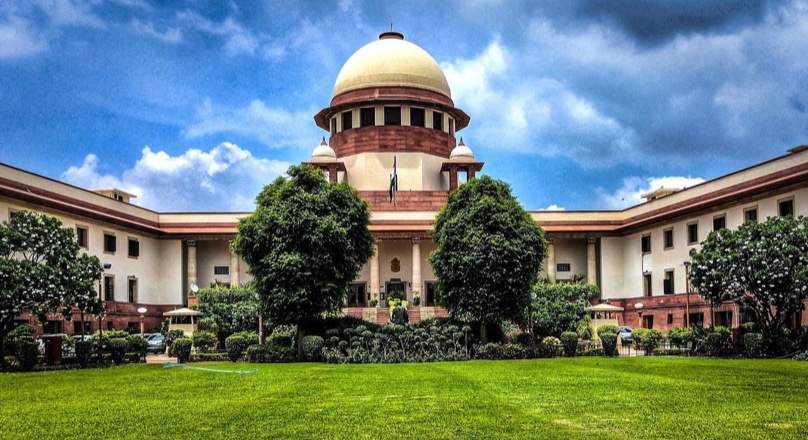
The Hindu journalists petition SC
- Source Of Info
- Reddif.com
- Date Of Fr
- 2003-11-08
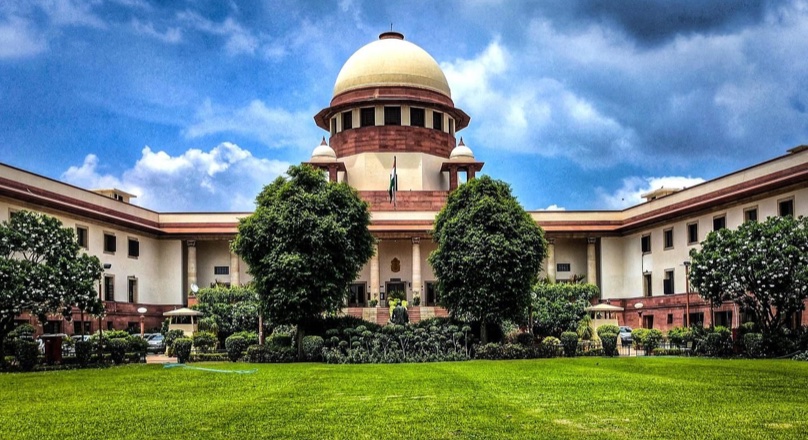
SC stays arrest of Tamil Nadu journalists
- Source Of Info
- Reddif.com
- Date Of Fr
- 2003-11-10
Why the Facebook summons case drew SC attention back to a case pending for 16 yrs now

- Source Of Info
- The Print
- Date Of Fr
- 2021-07-13