- Message
- show
Jaldi-Vidhi
Animal Welfare Board of India v. Union of India
Case details and hearing information from the Constitution Bench Pendency Portal.
577
Animal Welfare Board of India v. Union of India
This matter dealt with the legality of the traditional sport of Jallikattu.
- Petitioners Arguments
- The Petitioners argued that a binding judgment of a court cannot be directly annulled by an Act of the Legislature. The 2017 Amendment Act, by permitting Jallikattu, when the Supreme Court had explicitly banned it in A. Nagaraja , had done exactly this and could therefore not be sustained. That the 2017 Amendment Act has not altered the basis on which the decision in A. Nagaraja was made, namely that Jallikattu was violative of several provisions of the Prevention of Cruelty to Animals Act and Art. 21 and Art. 51A(g). It had merely created exceptions to the provisions of the Prevention of Cruelty to Animals Act, that the conduct of Jallikattu was found to violate (by inserting s. 3(2), s. 11(3)(f), the proviso to s. 22, s. 27(c) and s. 28 A to the Prevention of Cruelty to Animals Act). That the 2017 Amendment Act, by merely creating exceptions in favour of Jallikattu to permit it, without addressing the provisions of the Prevention of Cruelty to Animals Act that Jallikattu was found to be violative of (Ss. 3, 11 and 22) in itself violated these sections of the Act. That according to the A. Nagaraja judgment, animals were entitled to lead their life with honour and dignity, and the 2017 Act by permitting Jallikattu, a sport which inflicted unnecessary pain and torture on bulls deprived bulls of a dignified life. That Art. 21 must be given a broad interpretation and animals should be brought within the meaning of ‘person’ under the Article in furtherance of the previous argument. That the Amendment Act, by allowing Jallikattu which involved unnecessarily provoking the animal, was violative of Art. 51A (g).
- Responders Arguments
- That a proper reading of the instructions issued by the court in A. Nagaraja indicates that the Court had not prohibited Jallikattu altogether, but merely tried to ensure that no cruelty was inflicted upon the bulls. The guidelines issued by the Government through the notifications that organisers of Jallikattu had to adhere to, created safeguards against harm being inflicted on bulls. That Jallikattu has been carried out for centuries in the state of Tamil Nadu, a fact also recognised in A. Nagaraja, and a prohibition would be denying the perpetuation of an activity that is part of their culture. That Jallikattu is a socio-religious festival not merely for entertainment, and the beliefs of the pastoral communities warrant protection under Art. 25 . That the mere fact that there had been incidents of violation of regulations could not sustain a blanket ban on Jallikattu since when conducted in accordance with the guidelines, Jallikattu was not in contravention of the Prevention of Cruelty to Animals Act.
- Last Listed On
- 2023-05-18
- Start Date
- 2018-02-02
- End Date
- 2023-05-18
- Card Stage Date
- 2023-05-18
- Review Petition No
- W.P.(C) No. 23/2016
- Case Status
- Archive
- Bench Status
- Constituted
- Subject Matter
- Constitution
- Pendency
- 5 years, 3 months, 16 days
- Disposal Time
- 5 years, 3 months, 16 days
5 Judge Bench
Judgment delivered
- Consider As Stage Of Pendency
- false
Date of institution of case
Date of reference to 5 Judge Bench
Judgement pronounced
The present matter relates to the legality of the traditional sport of Jallikattu . In 2006, the Madras High Court banned the sport , stating that it was in violation of the Prevention of Cruelty to Animals Act, 1960. In 2009, the Tamil Nadu government passed the Tamil Nadu Regulation of Jallikattu Act, which, while permitting the conduct of the sport, issued guidelines that organisers of Jallikattu had to adhere to. In 2011, the Ministry of Environment and Forests, through a notification added bulls to its list of animals that could not be trained or exhibited as performing animals. In 2014, the Supreme Court, in Animal Welfare Board of India v. A. Nagaraja [(2014) 7 SCC 547] banned Jallikattu and struck down the Tamil Nadu Regulation of Jallikattu Act, 2009 on the ground that it was repugnant to the provisions of the Prevention of Cruelty to Animals Act, 1960 (and therefore violative of Art. 254(1) ). In 2016, the Ministry of Environment Forest and Climate Change issued a new notification which again held that certain animals (including bulls) could not be trained or exhibited as performing animals. However, it carved out an exception for events such as Jallikattu in Tamil Nadu and bullock cart races that are held as part of custom in other parts of the country. Certain conditions were imposed so as to ensure that “no unnecessary pain or suffering is inflicted” in the conduct of Jallikattu . This had the effect of re-permitting Jallikattu . This notification was challenged by the petitioners. While the matter was being heard, the notification was withdrawn and the Prevention of Cruelty to Animals (Tamil Nadu Amendment) Act, 2017 was passed, which effectively exempted the application of the Prevention of Cruelty to Animals Act to Jallikattu . The petitioners challenged this Act as well, and the Supreme Court after hearing the matter felt that there were substantial questions relating to the interpretation of the Constitution and referred the matter to a Constitution Bench.
Is the Tamil Nadu Amendment Act referable, in pith and substance, to Entry 17, List III of the Seventh Schedule to the Constitution of India, or does it further and perpetuate cruelty to animals; and can it, therefore, be said to be a measure of prevention of cruelty to animals? Is it colourable legislation which does not relate to any Entry in the State List or Entry 17 of the Concurrent List? The Tamil Nadu Amendment Act states that it is to preserve the cultural heritage of the State of Tamil Nadu. Can the impugned Tamil Nadu Amendment Act be stated to be part of the cultural heritage of the people of the State of Tamil Nadu so as to receive the protection of Article 29 of the Constitution of India? Is the Tamil Nadu Amendment Act, in pith and substance, to ensure the survival and well-being of the native breed of bulls? Is the Act, in pith and substance, relatable to Article 48 of the Constitution of India? Does the Tamil Nadu Amendment Act go contrary to Articles 51A(g) and 51A(h) , and could it be said, therefore, to be unreasonable and violative of Articles 14 and 21 of the Constitution of India? Is the impugned Tamil Nadu Amendment Act directly contrary to the judgment in A. Nagaraja (supra), and the review judgment dated 16th November, 2016 in the aforesaid case, and whether the defects pointed out in the aforesaid two judgments could be said to have been overcome by the Tamil Nadu Legislature by enacting the impugned Tamil Nadu Amendment Act?
Prevention of Cruelty to Animals (Tamil Nadu Amendment) Act, 2017
While the referral order of the Supreme Court discusses the background of the issues at hand and frames questions that have to be referred to the Constitution Bench, it does not provide detailed reasoning for why this particular case had to be referred to a larger bench. After hearing arguments, the Apex Court was of the view that the writ petitions involved substantial questions pertaining to the interpretation of the Constitution which needed to be authoritatively pronounced upon by a Constitution Bench, and hence referred the matter.
Animal Welfare Board of India v. A. Nagaraja [(2014) 7 SCC 547]
Compassion Unlimited Plus Action v. Union of India through Secretary Ministry of Environment, Forest and Climate Change
- Date Of Institution Start
- 2016-01-11
- Case No
- W.P.(C) No. 24/2016
Gauri Maulekhi v. Union of India Ministry of Environment, Forest and Climate Change
- Date Of Institution Start
- 2016-01-11
- Case No
- W.P.(C) No. 25/2016
People For Ethical Treatment of Animals India v. Union of India Ministry of Environment, Forest and Climate Change through the Secretary
- Date Of Institution Start
- 2016-01-11
- Case No
- W.P.(C) No. 26/2016
Federation of Indian Animal Protection Organizations (FIAPO) v. Union of India
- Date Of Institution Start
- 2016-01-11
- Case No
- W.P.(C) No. 27/2016
Animal Equality v. Union of India
- Date Of Institution Start
- 2016-01-28
- Date Of Tagging
- 2016-01-29
- Case No
- W.P.(C) No. 88/2016
- Date Of Tagging Link
- https://drive.google.com/file/d/16pZxY7TGArdNM1BaFluKR3pMw5iWBGAL/view?usp=sharing
People for Ethical Treatment of Animals (PETA) India v. State of Tamil Nadu
- Date Of Institution Start
- 2017-07-06
- Date Of Tagging
- 2017-11-06
- Case No
- W.P.(C) No. 1011/2017
- Date Of Tagging Link
- https://drive.google.com/file/d/1pZRELKYZHqqv7OMVre8jUwW9T7zOrGnC/view?usp=sharing
People for Ethical Treatment of Animals (PETA) India v. State of Maharashtra
- Date Of Institution Start
- 2017-09-22
- Date Of Tagging
- 2017-11-13
- Case No
- W.P.(C) No. 1059/2017
- Date Of Tagging Link
- https://drive.google.com/file/d/1V9hBRbHLvt1roPLMTrz8HYXoaIjfPBio/view?usp=sharing
Federation of Indian Animal Protection Organizations (FIAPO) v. Union of India
- Date Of Institution Start
- 2017-11-16
- Date Of Tagging
- 2018-01-19
- Case No
- W.P.(C) No. 10/2018
- Date Of Tagging Link
- https://drive.google.com/file/d/1yzhTX7huykUNX7Q8XOp5Fzz461syyvjX/view?usp=sharing
Federation of Indian Animal Protection Organizations (FIAPO) v. Union of India
- Date Of Institution Start
- 2017-11-16
- Date Of Tagging
- 2019-01-14
- Case No
- W.P.(C) No. 6/2018
- Date Of Tagging Link
- https://drive.google.com/file/d/1uCLgNWjDq2ErPqNMB3eZYZCOcPJNKt_5/view?usp=sharing
Vikramsinh Nivrutti Bhosale v. State of Maharashtra
- Date Of Institution Start
- 2017-11-20
- Date Of Tagging
- 2017-12-11
- Case No
- SLP(C) No. 3528/2018
- Date Of Tagging Link
- https://drive.google.com/file/d/1m_e10l0acIN6G0poXyO7y9FrAi4dvWf2/view?usp=sharing
N.G. Jayasimha v. Union of India
- Date Of Institution Start
- 2017-12-01
- Date Of Tagging
- 2017-12-12
- Case No
- W.P.(C) No. 1193/2017
- Date Of Tagging Link
- https://drive.google.com/file/d/1RsbLtV59_DWWuUnAiiMOgQaCFIk6T_mN/view?usp=sharing
Vikramsinh Nivrutti Bhosale v. Union of India
- Date Of Institution Start
- 2017-12-04
- Date Of Tagging
- 2017-12-11
- Case No
- W.P.(C) No. 1188/2017
- Date Of Tagging Link
- https://drive.google.com/file/d/1m_e10l0acIN6G0poXyO7y9FrAi4dvWf2/view?usp=sharing
State of Maharashtra v. Ajay Marathe
- Date Of Institution Start
- 2017-12-04
- Date Of Tagging
- 2017-12-11
- Case No
- SLP(C) No. 3526-3527/2018
- Date Of Tagging Link
- https://drive.google.com/file/d/1m_e10l0acIN6G0poXyO7y9FrAi4dvWf2/view?usp=sharing
People for the Ethical Treatment of Animals India v. State of Karnataka
- Date Of Institution Start
- 2018-09-12
- Date Of Tagging
- 2018-12-07
- Case No
- W.P.(C) No. 1152/2018
- Date Of Tagging Link
- https://drive.google.com/file/d/1TJFf-4rW8lGk5aS83k9RfMUOr-XoWGlQ/view?usp=sharing
Ajay Marathe v. State of Maharashtra
- Date Of Institution Start
- 2021-12-08
- Date Of Tagging
- 2021-12-15
- Case No
- T.C.(C) No. 60/2021
- Date Of Tagging Link
- https://drive.google.com/file/d/1ykmK3q41Bmrw9ANgnxxnPWmQi43xiV3s/view?usp=sharing
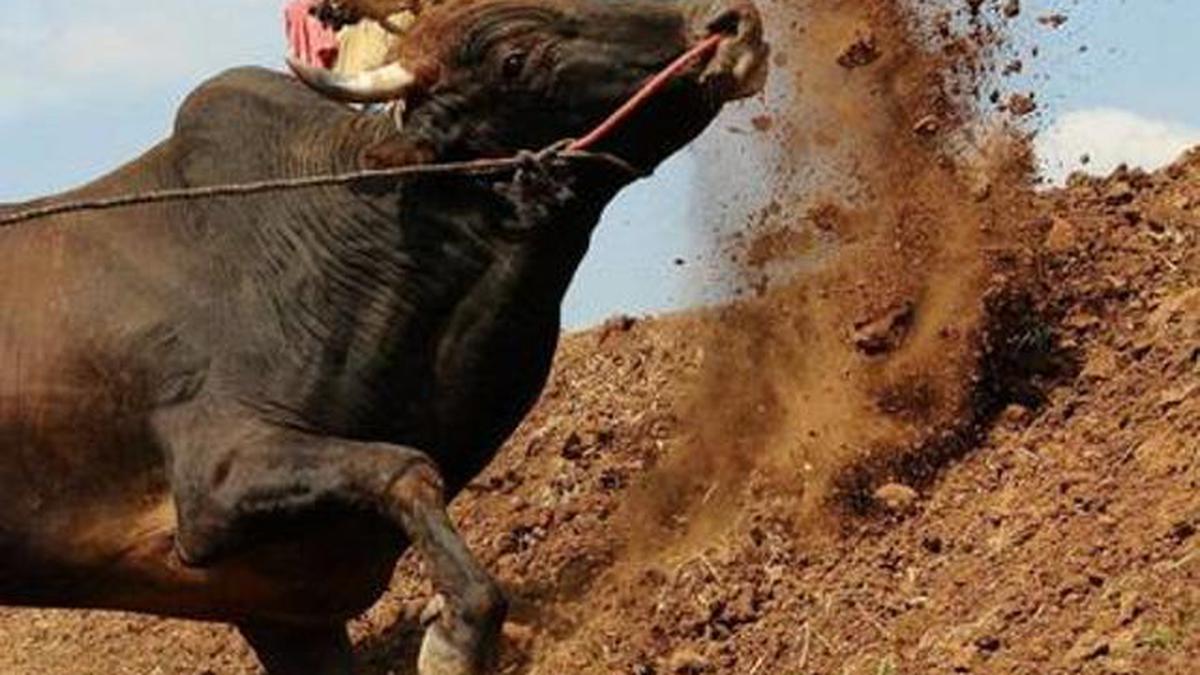
Walking the talk on Jallikattu
- Source Of Info
- The Hindu
- Date Of Fr
- 2016-01-16
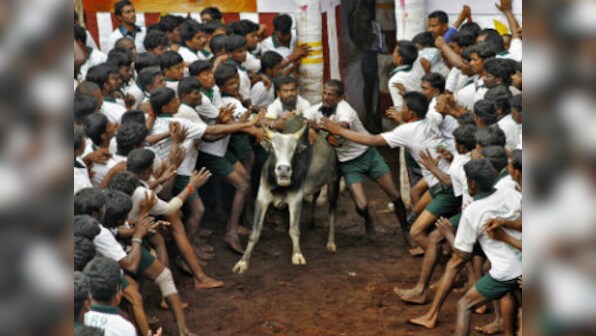
Jallikattu: Even if there is a revocation, Tamil people should ensure sport is strictly regulated
- Source Of Info
- Firstpost
- Date Of Fr
- 2017-02-19
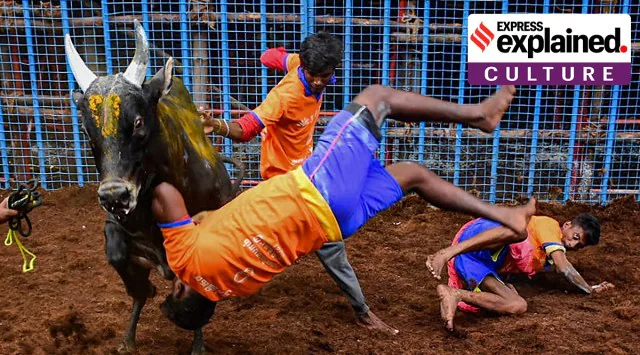
Explained: As Jallikattu begins, recalling the cultural argument for an ancient tradition
- Source Of Info
- Indian Express
- Date Of Fr
- 2021-01-16