- Message
- show
Jaldi-Vidhi
Property Owners Association v. State of Maharashtra
Case details and hearing information from the Constitution Bench Pendency Portal.
596
Property Owners Association v. State of Maharashtra
This case deals with the constitutional validity of Chapter VIII-A of the Maharashtra Housing and Area Development Act, 1976.
- Petitioners Arguments
- The decision in Minerva Mills merely proceeded on the assumption that Art. 31C , as it stood post Kesavananda Bharati was revived. This was neither discussed nor adjudicated upon in Minerva Mills and therefore one could not call this a decision made in Minerva Mills . The doctrine of revival as applied to ordinary statutes has not been applied in India to constitutional amendments. Article 368(2) states that “the Constitution shall stand amended in accordance with the terms of the Bill”, casting doubt on the fact that Art. 31C as it stood post- Kesavananda Bharati was still valid, as the Article had not been ‘amended’ by a bill or an Act. The provisions of Chapter VIII-A are violative of the principles of natural justice as the owner is not given an opportunity to make a representation before his right is acquired. For Art. 31C to apply, it had to be established that the true object of Chapter VIII-A was to give effect to Art. 39(b) and a mere declaration to that effect was not enough. The Court could examine the true nature, object and scope of the legislation to see whether Art. 31C applied to the legislation. There was no rationale behind the application of Chapter VIII-A to: Only buildings in Mumbai Only buildings built before 01-09-1940, thus violating Art. 14.
- Responders Arguments
- Art. 31C as originally enacted, excluding the part that was declared unconstitutional in Kesavananda Bharati , was ‘revived’ and constituted a law in force. Art. 31C, as it was, post- Kesavananda Bharati was not adjudicated upon in Minerva Mills and subsequent cases because it was an obvious position in law, one which was not disputed at all. “Material resources of the community” were not confined to public resources but included all resources, natural and man-made, public and private owned as was held by a nine-judge bench in Mafatlal Industries Ltd. v. Union of India , and unless it was successfully challenged, it was the binding precedent that was to be followed. Part VIII-A could not be declared unconstitutional on grounds of violation of Art. 14 and 19 due to the application of Art. 31(C), and even if it could be, it was not violative of Art. 14 and 19.
- Last Listed On
- 2024-11-05
- Start Date
- 2002-02-20
- End Date
- 2024-11-05
- Card Stage Date
- 2024-11-05
- Review Petition No
- C.A. No. 1012/2002
- Case Status
- Archive
- Bench Status
- Constituted
- Subject Matter
- Constitution
- Comment
- NA
- Disposal Time
- 22 years, 8 months, 17 days
9 Judge Bench
Judgment delivered
- Consider As Stage Of Pendency
- false
Date of institution of case
Date of reference to 5 Judge Bench
Date of reference to 7 Judge Bench
Date of reference to 9 Judge Bench
Judgement pronounced
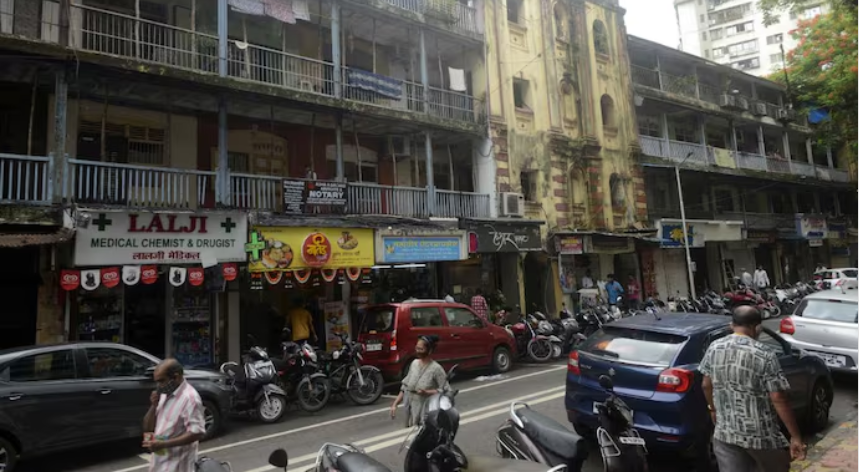
The main issue in this matter is the Constitutional validity of Chapter VIII-A of the Maharashtra Housing and Area Development Act, 1976 (“MHADA Act”). Taking cognizance of the rising cost of housing in Mumbai during the late 1930s and 40s, the Bombay Rents, Hotel and Lodging House Rates Control Act, 1947 was enacted, which fixed the rent recoverable, to be the amount landlords were recovering on Sep 1, 1940. Considering their returns were now fixed and marginal, landlords were disincentivised from carrying out maintenance and essential repair activities. Lack of upkeep coupled with the coastal climate of Mumbai resulted in deterioration of buildings, with a sizable number of them even collapsing due to the dilapidation. Due to the ineffectiveness of the MHADA Act and previous legislations in dealing with the issue of safe housing for occupiers, in 1986, Chapter VIII-A (“Acquisition of Cessed Properties for Co-Operative Societies of Occupiers”) was introduced into the MHADA Act, by way of amendment. Chapter VIII-A basically allowed occupants to take ownership of these dilapidated “cessed” buildings (built before Sep 1, 1940) in Mumbai , renovate/reconstruct the dilapidated property at their own cost, use the property for the same purpose for which it was used before acquisition and in return, provide a determined sum of money to the original owner. Section 1A of the Act provided that the Act was for giving effect to the policy of the State towards securing the Directive Principle of State Policy specified in Art. 39(b). This was challenged in the Bombay High Court and the Respondents argued that the Appellants could not challenge the Act on grounds of violation of fundamental rights under Arts.14 and 19 in view of Art. 31C. Art. 31C bars any constitutional challenge on grounds of Arts. 14 or 19 if the statute has been enacted in furtherance of Art. 39(b) or 39(c). The Bombay High Court rejected the Appellants’ case. In the Supreme Court, the matter was heard by a three-judge bench which referred the case to a five-judge bench. This Constitution Bench observed that the matter involved the interpretation of Article 39(b) of the Constitution, which had previously been discussed by a five-judge bench in Sanjeev Coke Mfg. Co. v. Bharat Coking Coal Ltd. [(1983) 1 SCC 147] . On 21-03- 2001, the matter was therefore referred to a larger bench of seven judges. The seven-judge Constitution Bench took note of the judgement given by a nine judge bench in Mafatlal Industries Ltd. v. Union of India [(1997) 5 SCC 536] . In this judgement, referring to Article 39(b), it was held that “material resources of the community” are not confined to public resources, and includes privately owned resources. The seven-judge bench expressed its doubts over this view, and therefore, on 20-02-2002, referred the matter to a larger bench of nine judges. It also observed that a similar issue was referred to a nine judge bench in I.R. Coelho v. State of Tamil Nadu [(1999) 7 SCC 580] , and suggested that the present matter be heard by a nine-judge bench immediately after the I.R. Coelho case was heard. The final judgement in that case was pronounced in 2007.
Does the ‘doctrine of revival’ apply to constitutional amendments in the same way that it does to ordinary legislation? What is the scope of Art. 39(b), with particular reference to the phrase “material resources of the community”? Is Chapter VIII-A of the Maharashtra Housing Area Development Act, 1976 constitutionally valid?
Chapter VIII-A of The Maharashtra Housing and Area Development Act, 1976
The High Court cited precedent to state that it was very difficult to determine the true scope and effect of a legislation. The Court could only decide if there was a reasonable nexus between the legislation and Art. 39(b), and the Court had to take a broad and liberal approach in determining the same. Considering the apathy of landowners towards ensuring reasonable living conditions for occupiers, it was the duty of the Government to provide shelter to the common people. In light of this, allowing occupiers to finance essential repairs/reconstruction and subsequently acquire such renovated property to ensure safe shelter for citizens was reasonable. It was necessary for the government to distribute the ‘meagre asset’ (property) as equitably as possible for the common good. The Supreme Court in its referral orders (five and seven-judge benches) expressed doubt regarding the correctness of the interpretation of Art. 39(b) by Constitution Benches in Mafatlal Industries Ltd. v Union of India and Sanjeev Coke Mfg. Co. v. Bharat Coking Coal Ltd . , wherein the Court ruled that private property came within the definition of “material resources of the community” under Art. 39(b) and could be redistributed for the common good. Considering this was a matter that required reconsideration of decisions of Constitution Benches and there were significant issues of constitutional interpretation at hand, the matter was referred to a nine judge bench.
Sanjeev Coke Mfg. Co. v. Bharat Coking Coal Ltd [(1983) 1 SCC 147]
Mafatlal Industries Ltd. v. Union of India [(1997) 5 SCC 536]
Shivram Ramayyaa Yerala v. State of Maharashtra through Secretary
- Date Of Institution Start
- 1992-03-14
- Case No
- SLP (C) No. 004367/1992
Pramila Chintamani Mohandas of Bombay, Indian Inhabitant v. State of Maharashtra through its Secretary
- Date Of Institution Start
- 1992-04-02
- Case No
- SLP (C) No. 005204/1992
Vinodray Harkishandas Sanghavi of Bombay, Indian Inhabitant v. State of Maharashtra through its Secretary
- Date Of Institution Start
- 1992-04-16
- Case No
- SLP (C) No. 005777/1992
Krishanlal Mohanlal Thakar (Dead) By Legal Representatives v. State of Maharashtra through Secretary
- Date Of Institution Start
- 1992-04-18
- Case No
- SLP (C) No. 006191-006192/1992
Ms/ Dharamdas Hargovinddas v. State of Maharashtra through its Secretary
- Date Of Institution Start
- 1992-04-30
- Case No
- SLP (C) No. 008797/1992
Dr. Aspi Framroze Golwalla v. State of Maharashtra
- Date Of Institution Start
- 1992-05-28
- Case No
- SLP (C) No. 007950/1992
Property Owners Association v. State of Maharashtra
- Date Of Institution Start
- 1992-12-03
- Case No
- W.P. (C) 934/1992
Manju Kacholia v. State of Maharashtra
- Date Of Institution Start
- 1993-04-24
- Case No
- SLP (C) No. 006744/1993
J. C. Mehta v. State of Maharashtra
- Date Of Institution Start
- 1995-01-19
- Case No
- SLP (C) No. 002303/1995
Rajkumari Narindersain Sindhwani v. Special Land Acquisition Officer
- Date Of Institution Start
- 1995-04-28
- Case No
- SLP (C) No. 013467/1995
Property Owners Association v. State of Maharashtra
- Date Of Institution Start
- 1998-12-01
- Case No
- W.P. (C) 660/1998
Kamlesh C. Shah v. State of Maharashtra
- Date Of Institution Start
- 1999-07-20
- Case No
- W.P. (C) 342/1999
Dhirajlal Jaradi v. State of Maharashtra through its Secretary
- Date Of Institution Start
- 2000-07-24
- Case No
- W.P. (C) 469/2000
Madhusudan J. Doshi of Mumbai, Indian Inhabitant v. State of Maharashtra through its Secretary
- Date Of Institution Start
- 2000-12-13
- Case No
- W.P. (C) 672/2000
Ahmed Habib Indian Inhabitant v. State of Maharashtra through the Secretary (Housing and Special Assistance Department)
- Date Of Institution Start
- 2001-09-24
- Case No
- W.P.(C) 419/2001
Sanjeev Coke, A Critique – An Evaluation of Article 39(B)
- Source Of Info
- National Law School of India Review
Why tenants in Mumbai have a right to be worried
- Source Of Info
- India Today
- Date Of Fr
- 2021-06-17