- Message
- show
Jaldi-Vidhi
In Re: Article 370 of the Constitution
Case details and hearing information from the Constitution Bench Pendency Portal.
604
In Re: Article 370 of the Constitution
This case deals with the validity of the Constitutional Orders that abrogated Article 370.
- Petitioners Arguments
- The indirect amendment of Article 370(3) without the recommendation of the Constituent Assembly violates the ‘ doctrine of colorability ’. The doctrine holds that if a legislature is not competent to legislate on something directly, it cannot legislate on the matter indirectly. The Jammu and Kashmir Reorganization Act, 2019 is unconstitutional as Article 3 of the Constitution does not allow the Parliament to demote the status of a State to that of a Union Territory. The Supreme Court, in the case of Prem Nath Kaul , had decided that Article 370 is transitory in nature and, therefore, so are the powers of the President under Article 370(1)(d) and Article 370(3). Any amendment to the Article should be recommended by the Constituent Assembly and after the dissolution of the Assembly, no such amendment is possible. The decision in Sampat Prakash v. State of Jammu and Kashmir which holds that Article 370 is permanent in nature, is ‘ per incuriam ’ for failing to consider Prem Nath Kaul. The matter should be referred to a larger bench due to the inconsistency between the judgments of Sampat Prakash v. State of Jammu and Kashmir and Prem Nath Kaul v. State of Jammu and Kashmir.
- Responders Arguments
- It was held by the Supreme Court in Sampat Prakash v. State of Jammu and Kashmir that the powers of the President extends beyond the dissolution of the Constituent Assembly. Therefore, the President can extend the provisions of the Constitution to the State of Jammu and Kashmir without the concurrence of the Constituent Assembly. The decision in Sampat Prakash is not ‘per incuriam’ because the Supreme Court, in Prem Nath Kaul , was not deciding on the question of the nature of Article 370. It was also a decision that was given prior to the convening of the Constituent Assembly and the historical context should be taken into consideration when deciding whether a judgment is a precedent or not. Hence, there is no need for a referral to a larger bench.
- Last Listed On
- 2023-12-11
- Start Date
- 2019-08-28
- End Date
- 2023-12-11
- Review Petition No
- W.P. (C) 1099 of 2019
- Case Status
- Archive
- Bench Status
- Constituted
- Subject Matter
- Constitution
- Disposal Time
- 4 years, 3 months, 14 days
5 Judge Bench
Judgment delivered
- Consider As Stage Of Pendency
- false
Date of institution of case
Date of reference to 5 Judge Bench
Judgement pronounced
The State of Jammu and Kashmir was ceded to India by the 1947 Instrument of Accession . According to the Instrument, the Union could only make laws pertaining to the matters of Defence, External Affairs, and Communications. The powers to make laws regarding all other matters remained vested in the State Government. Article 370 gave Constitutional recognition to the Instrument of Accession. It also laid down that no other provision of the Indian Constitution would be applicable to the State of Jammu and Kashmir, except Article 1 and Article 370 itself. It further mandated that Article 370 could only be abrogated or amended on the recommendation of the Constituent Assembly. Therefore, it allowed a fair amount of autonomy to Jammu and Kashmir - the State was allowed its own constitution, a separate flag and considerable freedom to make laws. The Jammu and Kashmir Constitution came into force on 26-01-1957 and the Constituent Assembly was dissolved. However, Article 370 remained. On 20-12-2018, President’s Rule was imposed in the State of Jammu and Kashmir in exercise of powers under Article 356 of the Constitution of India and was further extended on 03-07-2019 . Two Presidential Orders C.O. 272 and C.O. 273 were issued on 05-08-2019 for abrogating Article 370. These orders superseded the Constitution (Application to Jammu and Kashmir) Order, 1954 . C.O. 272 changed the interpretation of Article 370(3) such that the words “recommendation of the Constituent Assembly” were replaced with the words “recommendation of the Legislative Assembly”. This meant that the President could now issue an Order to abrogate or amend Article 370 on the recommendation of the Jammu and Kashmir Legislative Assembly. Since Jammu and Kashmir was under President’s rule, the powers of the State Legislature were being exercised by the Union legislatures. On 05-08-2019 the Rajya Sabha passed a Statutory Resolution recommending the abrogation of Article 370. The President then issued C.O. 273 which abrogated Article 370 and made all the provisions of the Indian Constitution applicable to the State of Jammu and Kashmir. The Central Government then passed the Jammu and Kashmir Reorganization Act, 2019 which divides the state of Jammu and Kashmir into two union territories of Ladakh (without a legislature) and Jammu and Kashmir (with a legislature). Several petitions challenging the Presidential Orders and the Jammu and Kashmir Reorganization Act of 2019 have been filed before the Supreme court. The matter was referred by a three judge bench headed by the then Chief Justice of India Justice Ranjan Gogoi to a five judge bench by an order dated 28-07-2019.
Can Article 370(1)(d) be validly used to alter the interpretation of Article 370 , as done by presidential order C.O. 272 ? Do the Statutory Resolution and C.O. 273 violate the fundamental democratic rights of the people of J&K under Articles 14 and 21 of the Constitution, by abrogating Article 370 without their consent during President’s Rule? Is the Jammu and Kashmir Reorganization Act, 2019 ultra vires Article 3 of the constitution for changing the status of the State of Jammu and Kashmir to a Union Territory? Is Sampat Prakash v. State of Jammu and Kashmir , which holds that the President's powers to issue Orders under Article 370 extend beyond the dissolution of the Constituent Assembly, ‘ per incuriam ’ for failing to consider Prem Nath Kaul v. State of Jammu and Kashmir , which allegedly held the opposite?
Presidential Order C.O. 272
Presidential Order C.O. 273
The Jammu and Kashmir Reorganization Act, 2019
The court was of the view that there is no conflict between Sampat Prakash v. State of Jammu and Kashmir and Prem Nath Kaul v. State of Jammu and Kashmir since Prem Nath Kaul was decided before the convening of the Constituent Assembly and judgments cannot be interpreted in vacuum, separate from their facts and context.
Sampat Prakash v. State of Jammu and Kashmir
Prem Nath Kaul v. State of Jammu and Kashmir
We the Citizens v. Union of India
- Date Of Institution Start
- 2014-07-23
- Date Of Tagging
- 2019-10-24
- Case No
- W.P.(C) No. 722/2014
- Date Of Tagging Link
- https://drive.google.com/file/d/1xLHsPdUDZMiE9f-geqSyEoqylcC3sn3X/view?usp=sharing
West Pakistan Refugees Action Committee Cell 1947 v. Union of India
- Date Of Institution Start
- 2015-11-06
- Date Of Tagging
- 2016-08-12
- Case No
- W.P.(C) No. 871/2015
- Date Of Tagging Link
- https://drive.google.com/file/d/1hOwEn5Gt9VH8FLxPAK-5hxKjEBwZ216C/view?usp=sharing
Dr. Charu Wali Khanna v. Union of India
- Date Of Institution Start
- 2017-05-03
- Date Of Tagging
- 2017-08-14
- Case No
- W.P.(C) No. 396/2017
- Date Of Tagging Link
- https://drive.google.com/file/d/1gEEJEVA0hpGeNBx-DpqfLpBo9IlXvUmT/view?usp=sharing
Kumari Vijay Lakshmi Jha v. Union of India
- Date Of Institution Start
- 2017-07-03
- Date Of Tagging
- 2019-02-18
- Case No
- SLP(C) No. 19618/2017
- Date Of Tagging Link
- https://drive.google.com/file/d/1okJ82jrpG7ZbPzo438Mhb37tHlGhl6Qa/view?usp=sharing
Kali Dass v. Union of India
- Date Of Institution Start
- 2017-08-14
- Date Of Tagging
- 2017-09-04
- Case No
- W.P.(C) No. 756/2017
- Date Of Tagging Link
- https://drive.google.com/file/d/1X5xH4-A6fWpaH0JBoLUKmQHcu6spyQFN/view?usp=sharing
Radhika Gill v. Union of India
- Date Of Institution Start
- 2018-01-31
- Date Of Tagging
- 2018-05-01
- Case No
- W.P.(C) No. 398/2018
- Date Of Tagging Link
- https://drive.google.com/file/d/1sFjauW9J9rE0uWKQLzewWYMCo8X765x-/view?usp=sharing
Reapan Tikoo v. Union of India
- Date Of Institution Start
- 2018-08-02
- Case No
- W.P.(C) No. 924/2018
Major Ramesh Upadhyay v. Union of India
- Date Of Institution Start
- 2018-08-23
- Date Of Tagging
- 2018-11-13
- Case No
- W.P.(C) No. 1092/2018
- Date Of Tagging Link
- https://drive.google.com/file/d/1X5xH4-A6fWpaH0JBoLUKmQHcu6spyQFN/view?usp=sharing
Ashwini Kumar Upadhyay v. Union of India
- Date Of Institution Start
- 2018-09-20
- Date Of Tagging
- 2019-01-14
- Case No
- W.P.(C) No. 1162/2018
- Date Of Tagging Link
- https://drive.google.com/file/d/1Kh2HFDKY2MXkG1CysI7m2jdsJtVlnPMg/view?usp=sharing
Manohar Lal Sharma v. Union of India
- Date Of Institution Start
- 2019-08-06
- Case No
- W.P.(C) No. 1013/2019
Shakir Shabir v. Union of India
- Date Of Institution Start
- 2019-08-09
- Case No
- W.P.(C) No. 1048/2019
Farooq Ahmad Dar v. Union of India
- Date Of Institution Start
- 2019-08-09
- Case No
- W.P.(C) No. 1082/2019
Soayib Qureshi v. Union of India
- Date Of Institution Start
- 2019-08-09
- Case No
- W.P.(C) No. 1068/2019
Mohd. Akbar Lone v. Union of India
- Date Of Institution Start
- 2019-08-10
- Case No
- W.P.(C) No. 1037/2019
Inder Salim Alias Inder Ji Tikoo v. Union of India
- Date Of Institution Start
- 2019-08-13
- Case No
- W.P.(C) No. 1062/2016
Radha Kumar v. Union of India
- Date Of Institution Start
- 2019-08-17
- Case No
- W.P.(C) No. 1070/2019
Muzzafar Iqbal Khan v. Union of India
- Date Of Institution Start
- 2019-08-27
- Case No
- W.P.(C) No. 1104/2019
Jammu & Kashmir People Conference v. Union of India
- Date Of Institution Start
- 2019-09-12
- Case No
- W.P.(C) No. 1165/2019
Mohammed Yousuf Tarigami v Union of India
- Date Of Institution Start
- 2019-09-16
- Date Of Tagging
- 2019-09-30
- Case No
- W.P.(C) No. 1210/2019
- Date Of Tagging Link
- https://drive.google.com/file/d/1EP67V4wqAp1yngWxDqUbK1iCK1b2zbl3/view?usp=sharing
Rifat Ara Butt v. Union of India
- Date Of Institution Start
- 2019-09-24
- Case No
- W.P.(C) No. 1222/2019
Jammu and Kashmir High Court Bar Association v. Union of india
- Date Of Institution Start
- 2019-09-30
- Case No
- W.P.(C) No. 1268/2019
Peoples Union of Civil Liberties v. Union of India
- Date Of Institution Start
- 2019-11-14
- Case No
- W.P.(C) No. 1368/2019
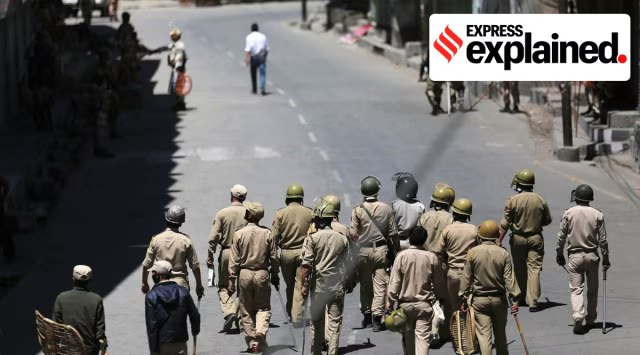
Explained: Wheel moves on J&K-Article 370 petitions before SC, what’s under challenge in these cases?
- Source Of Info
- The Indian Express
- Date Of Fr
- 2022-04-28
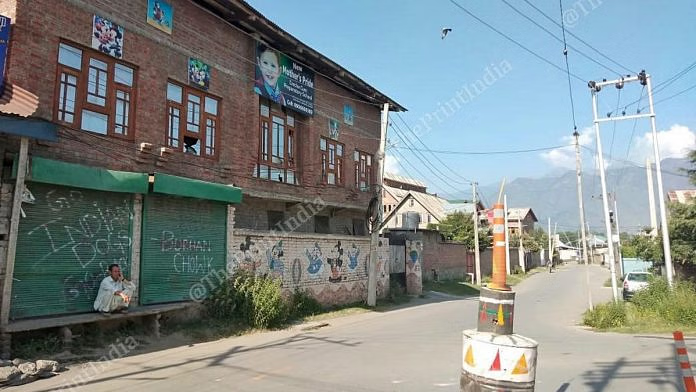
Abrogation of Article 370 was long overdue. But we must not hurry change in mindset
- Source Of Info
- The Print
- Date Of Fr
- 2021-08-05
Kashmir | Abrogation Of Article 370 In The Valley, A Memoir
- Source Of Info
- Outlook India
- Date Of Fr
- 2020-06-17