- Message
- show
Jaldi-Vidhi
Re: Assent, Withholding, or Reservation of Bills by the Governor and President of India
Case details and hearing information from the Constitution Bench Pendency Portal.
611
Re: Assent, Withholding, or Reservation of Bills by the Governor and President of India
Presidential reference about the constitutional limits on the Governor’s and President’s powers when granting, withholding, or reserving assent to State Bills under Articles 200 and 201.
- Petitioners Arguments
- Favouring the Reference: 1. Article 200 permits the Governor to withhold his assent without returning it to the legislature. 2. Timelines cannot be judicially inserted into Article 200 or 201 , as doing so would rewrite the Constitution and exceed judicial authority. 3. Decisions under Articles 200 and 201 are not justiciable, as they involve complex constitutional and political considerations which are beyond judicial review. 4. The Governor is not always bound by the aid and advice of the Council of Ministers, and may exercise limited discretion in exceptional situations such as constitutional breakdown or absence of a functioning ministry. 5. Invoking Article 142 to enforce assent or create timelines would potentially violate the separation of powers doctrine.
- Responders Arguments
- Opposing the Reference: 1. The reference is not maintainable as it is effectively an intra-court appeal and reopening a decided matter through the route of Article 143 would undermine judicial discipline. 2. Unfettered discretion on the part of the Governor could undermine the state’s autonomy and the elected government, and withholding of assent must be accompanied by returning the bill to the legislature for reconsideration as per the first proviso of Article 200. 3. Reading timelines into Article 200 does not count as an amendment. 4. The Governor’s decision to grant or withhold assent is subject to judicial review, to prevent misuse of power, arbitrariness and constitutional impasse. 5. Governors must act only on the aid and advice of the Council of Ministers except under narrow circumstances defined by the Constitution. 6. Article 142 allows the Court to resolve constitutional ambiguities and provide directions in exceptional circumstances.
- Last Listed On
- 2025-09-11
- Start Date
- 2025-05-13
- End Date
- 2025-11-20
- Card Stage Date
- 2025-05-13
- Review Petition No
- Spl. Ref. No. 1/2025
- Case Status
- Archive
- Bench Status
- Constituted
- Subject Matter
- Constitution
- Comment
- NA
- Pendency
- 6 months, 6 days
- Disposal Time
- 6 months, 7 days
5 Judge Bench
Judgement Reserved
- Consider As Stage Of Pendency
- true
Date of reference to 5 Judge Bench
Date of institution of case
Judgement pronounced
This reference stems from the Supreme Court’s decision in State of Tamil Nadu v. Governor of Tamil Nadu . In the instant case, the State had approached the Court regarding the Governor’s inaction on ten bills–some of which were pending from 2020–even after they were re-enacted. The Court held that a Governor cannot keep Bills pending indefinitely, since such inaction amounts to an unconstitutional “pocket veto”. To prevent delays, the Court laid down specific timelines for the exercise of powers by the Governor and the President: when the Governor is acting on the aid and advice of the Council of Ministers, he must either withhold assent or reserve the Bill for the President within one month of receiving it. If the Governor decides to act contrary to ministerial advice, he is required to return the Bill with a message explaining his objections or to forward it for the President’s consideration within three months. It further prescribed a timeline of three months within which the President should either give assent, direct the Governor to return the Bill to the State Legislature, or seek the Supreme Court’s opinion under Article 143 on constitutional issues. The case also expanded the scope of judicial review by allowing State governments to approach constitutional courts and seek a mandamus if the timelines are not followed. In the context of this judgment, the President of India has now sought the opinion of a five-judge Constitution Bench under Article 143 on how the Governor and the President should exercise their powers of assent, withholding, and reservation of Bills under Articles 200 and 201 .
What are the constitutional powers and limitations of the Governor under Article 200 ? Is the Governor bound by the aid & advice of the Council of Ministers while exercising his powers under Article 200? To what extent is the exercise of powers by the Governor and the President under Articles 200 and 201 , respectively, subject to judicial review? Can the judiciary prescribe procedures or timelines for the exercise of powers by the Governor and the President under Articles 200 and 201, respectively, when none are expressly provided in the Constitution? Can a bill passed by the State Legislature be a law in force without the assent of the Governor, and can it be subjected to judicial review before coming into force? Can the Supreme Court invoke Article 142 of the Constitution to pass orders that are inconsistent with the substantive provisions of the Constitution? Can the Supreme Court resolve disputes between the Union Government and the State Governments except by way of a suit under Article 131 ? Is it necessary for the President to seek the advice of the Supreme Court under Article 143 when the Governor reserves a Bill for the President's assent? Does the proviso to Article 145(3) mandatorily require a Supreme Court bench to first ascertain whether the matter before it involves a substantial question of constitutional interpretation and, if so, to refer the matter to a bench of not less than five Judges?
Articles 200, 201, 142 & 143 of the Constitution of India
Presidential reference under Article 143 to a five-judge bench of the Supreme Court to examine the nature and scope of the powers of the Governor and the President under Article 200 and Article 201 of the Constitution.
Tamil Nadu v. Governor of Tamil Nadu 2025 INSC 481
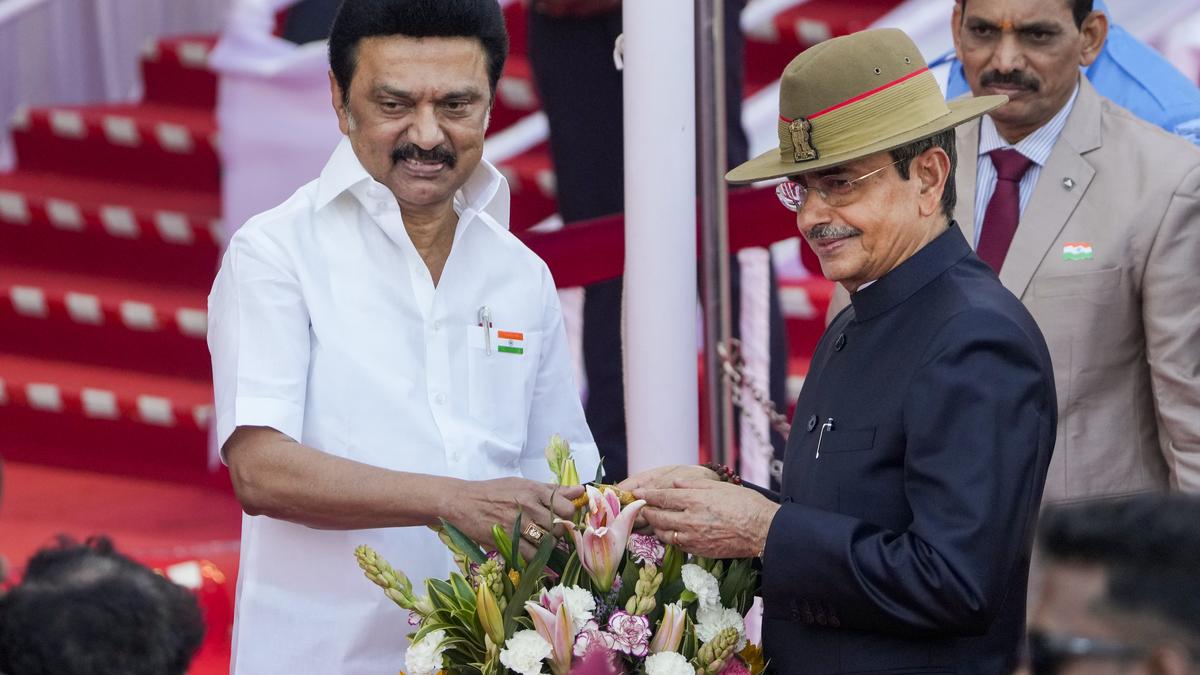
Can timelines be fixed for Governors?
- Source Of Info
- The Hindu
- Date Of Fr
- 2025-09-22
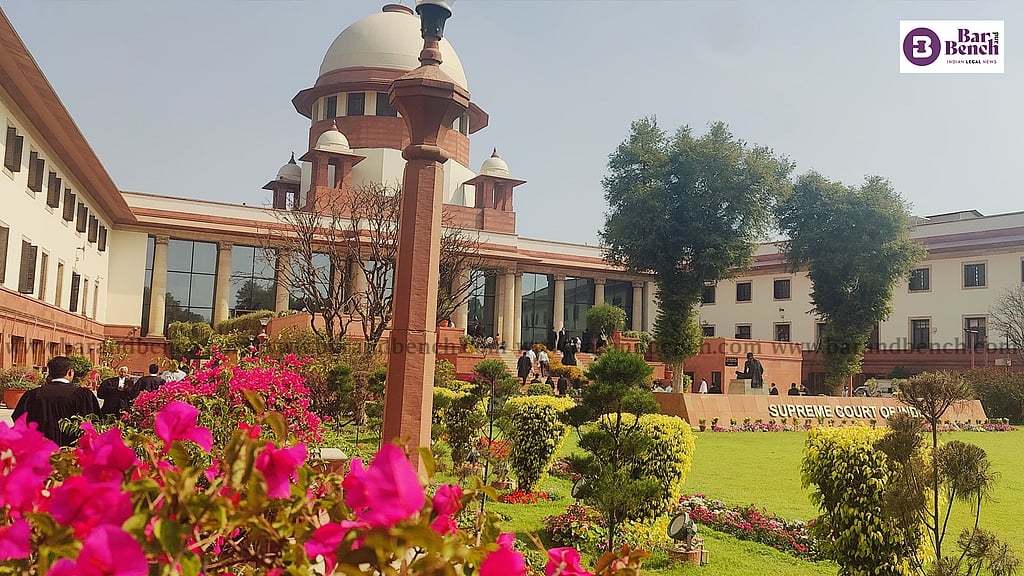
Allowing the Governor to veto a bill will render the elected State government moot: Supreme Court
- Source Of Info
- Bar & Bench
- Date Of Fr
- 2025-08-20
Guardrails for Discretionary Powers: A Case Comment on The State of Tamil Nadu v. The Governor of Tamil Nadu
- Source Of Info
- National Law School Journal, Vol 19, Issue 1
- Date Of Fr
- 2025-01-07
Almost all questions in presidential reference have been answered in TN Governor Judgement
- Source Of Info
- Supreme Court Observer
- Date Of Fr
- 2025-06-27
Presidential reference in TN Governor case puts a stark choice before Supreme Court
- Source Of Info
- The Indian Express
- Date Of Fr
- 2025-05-19